
Edition #11
Nostalgic dessert. The kids don't read. Manifest. Weighted vests. Over-diagnosis. Paris Hilton, Diane Keaton. A millennial saint. Pope socks. Supermarkets. Angus Steakhouse. Fan fiction.
Tricky desserts with weird flavours are done, reports Town & Country, in favour of nostalgic classics like pavlova, cake and crumble.
I was served pav for dessert at two fashion events in one day last week so I think there’s something in this. (I know, tough life, etc etc.) Unsurprising that we’d be turning to familiar comfort food in these anxiety-ridden times: a charcoal and black sesame profiterole might be clever and even delicious, but I doubt it ever soothed anyone’s soul.
Food writer Charlotte Druckman, who founded The Sweethearts, a Substack dedicated to all things dessert, captures the essence of this shift: "Dessert wasn't invented to disturb or provoke people! It's supposed to delight you, maybe help you digest. It should make you feel good." She advocates for "a perfectly executed, delicious slice of cake, a luscious, creamy pudding, a warm crumble with custard poured over it" as the ideal way to end a meal.
In an era where dining out can feel like a high-stakes game of culinary one-upmanship, there's a refreshing simplicity in ordering a perfectly executed slice of cake or a warm fruit crumble.

As someone who spent many happy, nerdy hours in the library as a kid, these stats from Vox make me really sad. (It’s American data but I imagine things would be similar here.)
What has plummeted… is how much kids read, especially outside of school. In 1984, the first year for which data is available, 35 percent of 13-year-olds reported reading for fun “almost every day,” according to NAEP. By 2023, that figure was down to 14 percent, and 31 percent of respondents said they never read for fun at all. Kids are also faring worse on tests that measure their information literacy, including their ability to recognise reliable sources.
Those results are indicative of a broader problem. Kids may be learning basic literacy, but “they're not reading in the ways that they need to read in order to be prepared for the tasks of learning and critical thinking,” Snow said. And a decline in those critical thinking skills has big implications not just for young people today, but for society as a whole.
The word of the year, according to the Cambridge Dictionary is manifest.

If Santa comes to 40-something women this year (as he should if he knows what’s good for him), it’s likely his sleigh will barely be able to make it off the ground due to all the weighted vests he’ll need to lug around.
The fad is being led by prominent gynaecologist and ‘menoposse’ member Dr. Mary Claire Haver, and might not be particularly chic, but it is effective. From WSJ:
Dr. Haver, whose book “The New Menopause” was a No. 1 bestseller this year, is the godmother of the weighted vest, wearing hers to lecture to her millions of social media disciples from her treadmill desk. She cites a 2000 study in the Journals of Gerontology which found that women using a weighted vest for five years (combined with jumping exercises) maintained their BMD (bone mineral density) more than those that didn’t. Dr. Haver sells weighted vests from the brand Prodigen via her Amazon storefront, from which she earns commission.
Other doctors and physical therapists I spoke with agreed that walking or exercising in a weighted vest could help add strength and bone density.

In what won’t come as a surprise to anyone who comes into contact with teenagers regularly,
writer and mental health advocate Rachel Kelly writes in the New Statesman that young people are in the midst of a crisis of over-diagnosing their own mental health conditions, when maybe they’re just experiencing bog standard human misery.
For the past few years, I’ve been running well-being workshops in schools and universities, both as someone who has experienced mental health problems myself and in my role as an ambassador for the charities SANE and Rethink Mental Illness. And something has started to bother me.
At the end of my sessions, adolescents come up to me, fluent in the language of mental health, and tell me they have a mental health condition – be that generalised anxiety disorder, or depression, or one of any number of personality disorders. But when I ask more about their diagnosis, it transpires that the only expert they have consulted is Dr Google.
This trend for self-diagnosis is running in parallel with an expansion in the number of possible mental health conditions, described by the psychologist Lucy Foulkes as “prevalence inflation”. Manuals such as the American Diagnostic and Statistical Manual of Mental Disorder (DSM), or the International Classification of Diseases, help psychiatrists to make their diagnoses. The first edition of the DSM, published in 1952, was 100 pages long. It now runs close to 1,000. Critics say we have started to find pathologies in normal human experiences. Or, to put it another way, to medicalise what Freud called “ordinary human unhappiness”.
Paris Hilton is so much more successful today than you probably imagined she is.
Her media company 11:11 Media expects to earn around AUD $77 million this year, according to Axios.
For years, Hilton has quietly built a fan engagement strategy that's heavily dependent not just on traditional media, but also newer platforms, like podcasts and the metaverse.
* 11:11 Media, the company's production firm, has a partnership with iHeartMedia to produce a range of podcasts spanning documentary-style series related to Hilton's youth impact work to a podcast about the history of the world's greatest nightclubs.
* It launched a metaverse experience called "Slivingland" on Roblox last year.
* 11:11 Media produced a YouTube Originals documentary in 2020 and two seasons of "Paris in Love" for Peacock.
* To grow bigger within those communities, 11:11 has made over 20 startup investments across companies with a focus on web3, gaming and AI from the profits off of its balance sheet, Gersh said.

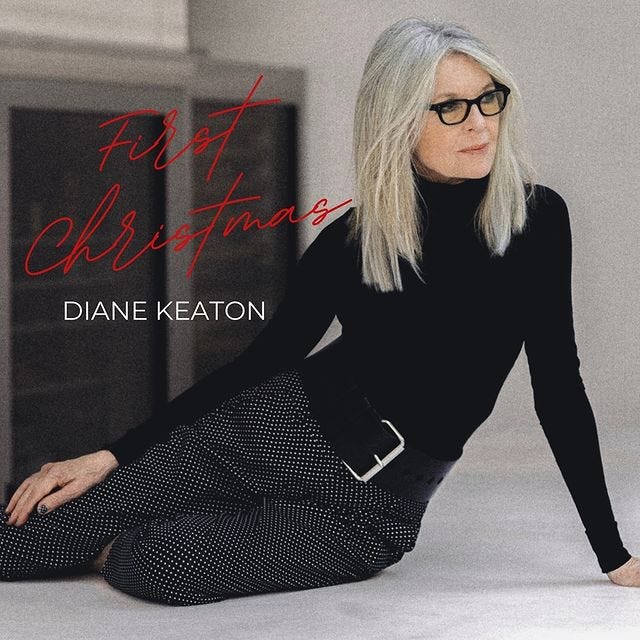
78 year old Diane Keaton—coincidentally the star of my favourite Christmas movie, The Family Stone—is seeing out her lifelong dream of being a professional singer with the release of her song, First Christmas, on November 29.
If that’s not the cutest thing you’ve ever heard, I don’t know how I can help you.
A London-born teenager who died of leukaemia in 2006 is set to become the first millennial saint.
Carlo Acutis—unironically (I think?) dubbed ‘God’s influencer’ and the ‘patron saint of the internet’ (cue my nanna rolling in her grave)—will be canonised on April 26. Let’s hope he’s more effective at responding to prayers when the wi-fi drops out than St Anthony ever is when I need him to find my missing keys.

Related, sort of: At €13 a pair, I can’t think of a cooler souvenir from Rome than a pair of socks from Gammarelli, the Pope’s official sock shop, via Shop Rat.

Loved this read about the evolution of grocery stores from Snaxshot.
In the beginning, we shopped for pantry staples at general stores with limited offerings, surrendering our household necessities to the store clerk that would choose for us, there were no brands, there were only needs to be met…
Our parents found themselves presented with the choice of brand vs. off-brand, in the end the process of elimination came down to utility, but in this era of Millennials and GenZ, groceries have evolved to be a form of external signaling—my olive oil most not only perform its inherit duty, but it most also communicate identity, lifestyle, statusor desire. Something prophesied by artist Andy Warhol back in the 1960s, his Campbell soup elevated mundane everyday items to a form of art, from soup to Coca-Cola bottles, his pieces also serving to represent a brewing era of mass consumption. Big box stores replaced humble general stores, think Walmart and their gargantuan footprint, and Kroger now considered the largest grocery chain with over 5,000 stores across the US, now operating like real estate brokers selling off their best shelf spaces to the highest bidders. Slotting fees as they are commonly known within the industry, is what drives grocers interests, it’s no longer to provide for needs but instead foster over consumption.

Everyone is replacing their black spatulas,
which a study has shown are mostly made from electronic waste, containing dangerously high levels of flame retardants that could theoretically, though not definitely, be leeching into our food.
“Spreading misinformation suddenly becomes a noble goal”
Cranky-but-clever London foodies have been posting fake gushing reviews for notorious tourist trap Angus Steakhouse in an effort to send out-of-towners flocking there instead of overrunning cooler local favourites - and it’s working.
“Angus Steakhouse is on my wish list for the last meal I ever have,” said one reviewer on Reddit. “I just hope the tourists don’t find out about it.”
“It was Taylor Swift and Freddy Mercury’s favourite eating spot—never mind the King,” claimed another on Tripadvisor, to which the restaurant replied that the facts are “a tad embellished.” The reviewer also curiously called the multi-chain restaurant a “small business” and a “hidden gem untouched by tourists.”
The campaign has focused on the chain’s steak sandwich, lauding it as a local favourite. “I’ve been a vegetarian for over 15 years, but not even I can resist Angus Steakhouse’s steak sandwiches,” one fake reviewer wrote.
I’ve never read or written any fan fiction, but how fascinating is this?
There are more than 12.5 million stories on Archive of Our Own, the go-to fanfiction website. The site itself is visited more than one billion views per month, according to SimilarWeb ... The second most-read story on AO3 is called Manacled. It’s a 350,000 word novel (about 1,175 pages making it longer than Ulysses) set in the world of Harry Potter and focused on the relationship between Draco Malfoy and Hermione Granger. Manacled has had more than 9.5 million reads since it was originally published in 2018. It has been translated into more than 20 different languages
Are the authors making any money or is it all too grey-area? And if they are, well, let’s just say I’m thinking maybe it’s time Meg March gets the All Fours treatment… The woman has been bored for 157 years, let’s help her have some fun.
See you next week xx
A health lecture I attended recently recommended skipping for bone health, so hopefully Santa will leave a skipping rope in our stockings.