
Edition 75
Free this week: the Pope is my guy, the It-bag's obituary, and why ice cream is the new designer perfume
Sometimes the content mix in this hot soup of a newsletter feels like just the right blend of ingredients, an idealised version of the Late Night Snacking recipe. Because this is one of those weeks, today’s newsletter is free for all. If you usually get just the free version and appreciate the whole meal, consider upgrading to paid.
As a very lapsed Catholic I can truly say that this is a sentence I never thought I’d write, but I am mad crushing on the Pope right now. Not in a romantic/sexual way, you heathen creeps, but intellectually. His much-lauded encyclical Magnifica Humanitas on the perils of AI this week was the show of leadership we desperately need at this critical juncture, at a time when leaders are in short supply everywhere we look, and the ones we do have are sorely lacking. If you have the time, it really is worth a read of all 42300-ish words of it (just reading the memes will also do), but he’s essentially calling for a lot more discernment around the rapid rise of AI and digital tech, urging that these tools be shaped for the common good rather than left entirely to a handful of multinational corporations, who will inevitably prioritise profit and algorithmic control over our fundamental rights as people. He likens this unchecked corporate control to a modern-day Tower of Babel, where a tiny, technically elite class centralises power, effectively dictating how we interact and shaping human behaviour to serve their own commercial or ideological ends. By putting efficiency and data extraction ahead of human wellbeing and purpose, these companies risk turning the human experience into a commodity—deepening social inequalities and eroding the actual communal bonds that keep us functioning as a healthy society. Ultimately, the encyclical argues that leaving our digital destinies entirely to market forces is a dangerous abdication of moral responsibility. It threatens to replace true human connection with a superficial, tech-driven version of life designed to benefit very few (I’d argue that we’re already seeing that in so many ways). But what I found the most interesting is how much it’s clear that, unlike most leaders today, Il Papa actually gets it — the encyclical is surprisingly clear-eyed about how the world actually works. It doesn’t ask us to quit technology and throw our phones in the ocean; instead, it stares the trade-offs dead in the eye and lays out at least an idea of what our next steps should be in terms of calling for real accountability, safeguards, and ethical standards. It doesn’t pretend to know how to solve everything overnight, but it gives us — and any government or business leaders hopefully listening — at least the beginnings of a roadmap for not losing our humanity to algorithms. From where I sit it feels like he’s the only person in charge who seems to care about young people and future generations, which is way more than we’re getting from anyone else right now. Also, he starts his days with Worldle: truly, a Pope of the people.
A few other important new AI stories:
Is AI Going to Destroy Our Lives or Not? Kyla’s Newsletter
Silicon Valley Is Bracing for a Permanent Underclass, NYT
The Biggest Tell That Something Was Written by AI, the Atlantic
Is the handbag over? I love a good handbag as much as the next girl, and thanks to my years in fashion I have a spectacular selection hanging off the back of my bedroom door to prove it. But if I’m being very honest, I barely ever carry one anymore. Unless I’m lugging my laptop around or on a plane with a nine step skincare routine and a Kindle and a support water bottle filled with hydration salts and more supplements than a Chemist Warehouse — I have a battered Chanel Deauville for this very purpose — everything I actually need, down to my car keys, is in my phone. And going out with just a phone in hand feels light, unencumbered, and sort of… feminist. Like, I just know I can get more shit done without being burdened by 15 lip balms, receipts for parking that will have faded to nothing by tax time, and two to three NeeDohs that have no place on my person hanging off my shoulder. So for me, the handbag has transitioned from a daily survival kit into a pure accessory — an outfit finisher rather than a practical necessity. Reading Vanessa Friedman’s latest piece in the NYT felt, then, like something of a validation. She confirmed that despite the recent frenzy for Matthieu Blazy’s collection of Maxi flapbags (for the philistines: nothing to do with feminine hygiene) the era of It-Bag dominance is fracturing: handbag demand dropped 5.5% this past April, while searches for briefcases jumped 14%, and queries for clothes with pockets skyrocketed by a mind-blowing 542%. And according to Friedman, my instinct that it feels more efficient to be without one checks out: historically, leaders like Margaret Thatcher wielded their structured box bags like political totems, but nowadays the ultimate power move is going bagless. I mean, it makes sense: the more powerful you are, the less you actually have to carry because you have people to deal with your stuff. Even Anna Wintour is mostly spotted carrying absolutely nothing but her phone. Doesn't stop me from loving bags — I literally just invested in a sunny, buttery Loewe Flamenco and I love her — but it does make me feel less guilty that my girls are, for the most part these days, gathering dust behind the door.
Since using one, my finances have changed on a daily buying-coffee, getting-dry-cleaning level, and in a more long-term savings way. I don’t leave my credit cards to languish in the back pocket of a subway-ass-grinding pair of dirty jeans. I don’t have crumpled cash flailing around the bottom of my bag. No more gnawed-on passport as an ID. Oh, and I don’t lose laundry tickets anymore! There is something about having this mini file cabinet in my bag that I wield like a sword, which keeps my brain more tight and structured, funneling into a bigger financial perspective. The organization of my LLW translates into how I look at my account overall: Like how I check my wallet for how much cash is in there, I check how much is on my credit card statement weekly. For some reason, when I was exclusively tapping with ApplePay, I never checked anything until I got a raging “amount due” alert in my inbox.
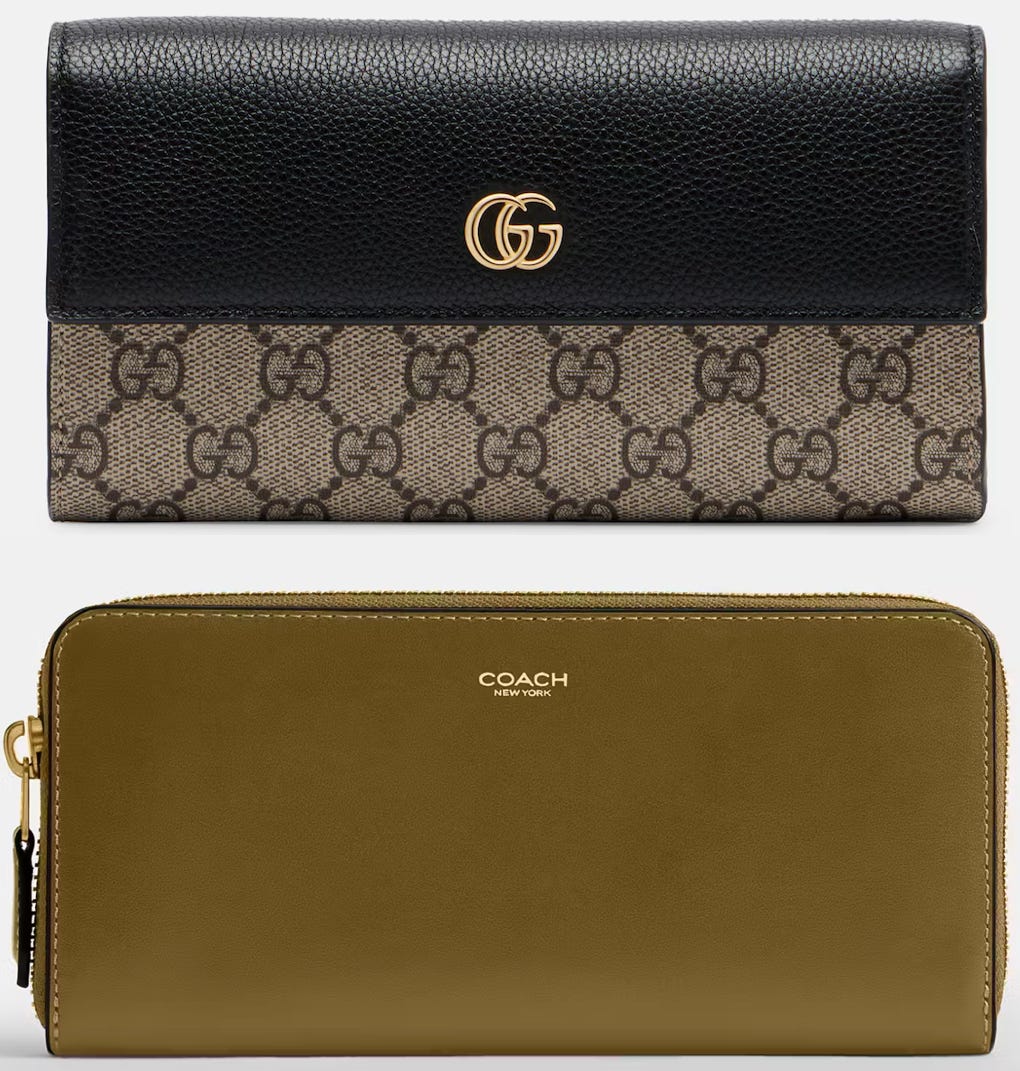
A new era of tacky taste is here. Business Insider published a piece about quiet luxury being usurped by this current gaudier age, and then Your Brain on Money took that article and expanded it into a brilliant analysis of how we got here — that essentially, wealth, status, and taste used to move together in a closed loop, but as the internet democratised “good” taste (via algorithms, shared knowledge, dupes), the loop broke. Meanwhile, the new billionaire class — who acquired raw economic power without ever coming up through the old systems of cultural refinement, and in fact, actively devalued the arts and humanities — have essentially ushered us into a post-taste era. For them, flaunting loud, tacky, “bad” taste isn’t less of an unhappy accident so much as the ultimate power move to signal that they are so dominant they don’t need taste to maintain their status.
A lot of the people with a ton of money right now genuinely do not have taste. Many tech billionaires dominating the headlines — Zuckerberg, Bezos — didn’t come up through the old system of cultural refinement. They came up through engineering and venture capital and the specific Silicon Valley meritocracy that actively disdained the humanities.
Stewart’s piece quotes Ana Andjelic: “Those people, it’s the same thing as the robber barons in the Gilded Age — they came into money, but they don’t have taste.” They have so much money it doesn’t matter anymore. They can just move the culture toward them instead of the other way around. Part of it is structural. Conspicuous consumption increases during periods of high economic inequality. We are objectively in a New Gilded Age, and the aesthetic is matching.
If taste can’t differentiate you anymore, because algorithms give everyone access to that knowledge, then the power move is to signal that you don’t need taste.
And how are these titans of tacky spending their wads of cash if not on The Row? Uber-luxury sports tourism, according to Vanity Fair:
Of course the most luxurious way to experience a game is in the owners box. But if that’s just out of reach, if not aspirational, for these Very Discerning People, this kind of access is a way to get “closer than ever to the game,” he says. At the 2026 FIFA World Cup, taking place across North America, “some people will be on the pitch,” Caine explains. City-specific off-site excursions are planned too—like literal breakfast at Tiffany’s in New York, celebrity training sessions in LA, and a dance workshop with the Dallas Cowboys Cheerleaders in Texas.
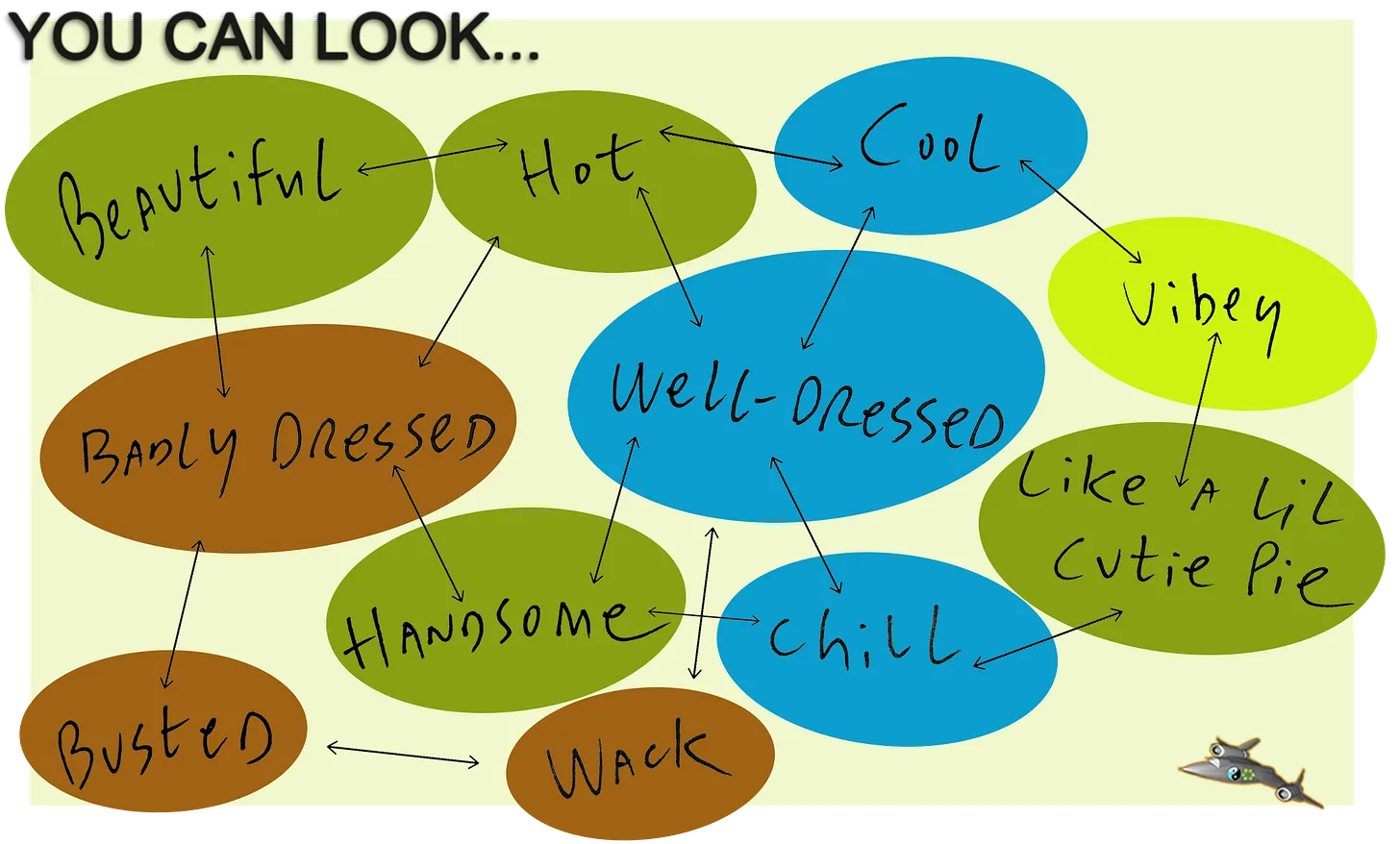
As I see it, someone could theoretically look beautiful, hot and well-dressed — bless their souls. Someone could look hot and badly dressed, which, hey, it could be worse, though I think their bad-dressedness will likely diminish their hotness.
Someone can look beautiful, well-dressed, cool, chill, and not hot. Hardly a tragedy. Someone might look cool, well-dressed, and vibey. That is very tight. Someone else might look vibey, chill and, though not hot, like a lil cutie pie. Also tight.
I don’t think it’s possible to be both busted and well-dressed, because the well-dressedness will recuperate, re-articulate and transfigure the bustedness. It is, vexingly, possible to look well-dressed yet wack. And so on.
The impeccable Nancy Jo Sales mused on the lack of visible teenagers in New York for Airmail. I don’t know how relevant it is here in Australia, where teenagers on e-bikes seem to be proliferating at staggering rates (not being a Karen, I’m a parent to one myself), but I do think the need to preserve real niche teen culture (as opposed to the globally homogenised online version of it) is relevant everywhere.
I’m here to talk about what tech addiction in kids is doing to us, and what it will mean for cities in the future. Because all those kids I used to see running around New York weren’t just hanging out. They were cross-pollinating culture. They were softening divisions—sometimes even fixing racism, one friendship at a time.
And they were never one kind of kid. They were kids of every ethnicity and socio-economic background. By bumping into one another in person, out in the wild, they got to know each other as people rather than abstractions or stereotypes. They shared tastes. They made music and art. They exchanged ideas. I remember when fashion scouts used to go downtown to see what kids were wearing because kids—not just the Miranda Priestlys of the world—were driving trends. They were always doing the coolest things first, organically and spontaneously.
—
Today, New York no longer seems to have a teen culture capable of producing that kind of originality—if it has any real teen culture at all. The homogenization of online life has come for New York kids, too, who now, for the most part, dress, talk, and act like teenagers everywhere else in America. We are living through a kind of teen colony collapse. And I wonder what that will mean for the future of cities—not just culturally but linguistically, too. Some kids will even admit that the current crop of teenage slang—“skibidi,” “rizz,” “gyatt”—feels less like a creative renaissance than the verbal by-product of algorithmic brain rot endlessly propagated by TikTok.
The New Republic’s “Can Marriage Survive the Manosphere?” is a really interesting look at the history of marriage through the lens of a new book from the historian Stephanie Coontz, who is about as preeminent as they come on this subject.
In her new book, For Better and Worse: The Complicated Past and Challenging Future of Marriage, she once again turns to the past to make sense of our current marriage crisis—namely that, for many, the appeal of marriage is rapidly dimming. While the divorce rate has stabilized since its peak in 1980, married couples now make up less than half of American households, down from 66 percent half a century ago. Fewer young people even aspire to marriage than in the past: A 2023 poll showed that two-thirds of twelfth graders said they wanted to get married, down from 80 percent in 1993, a drop driven almost entirely by young women changing their minds. Another recent survey showed that Gen Z men ranked marriage as their seventh most important marker of personal success, while Gen Z women put it a dismal eleventh out of a possible 13. In the past few years, publishers have unleashed a spate of divorce memoirs, nearly all of them by women, nearly all of them jubilant about life after marriage.
—
Coontz recognizes the importance of marriage without making a case for or against it, at least in this book. The most she offers here is that most Americans (and Europeans) consider it “the highest commitment a couple can make,” one that garners extra societal respect and support. Even at a time when many people have become ambivalent about actually getting married, marriage tells us something about ourselves, and, in examining its changing role from Paleolithic times through the present, Coontz shows that marriage has always been the terrain on which “formerly dominant ideas about gender, sexuality, love, and marriage” were “challenged, reworked, or repudiated in favor of new arrangements and ideals.” If it is to endure, she suggests, we will need a deep rethinking of how the institution can accommodate recent and rapid social and economic changes.
Couples are putting new relationships through “turbulence tests” — going on early trips together — to fast track their compatibility checks. Very Love is Blind-coded, but effective, I think. From Vogue:
For some, this could be a few hours’ trip to a lakeside cabin for the weekend, where things like driving, starting a campfire and cooking could factor into the long-term viability of the relationship. For other, slightly more daring couples, they may embark on an international trip to Europe or Asia for a weeks-long marathon of getting to know everything about the other person, and seeing if they can stomach spending 24 hours a day with them.
—
Relationship expert and chief divorce Educator at PartWise, Kimberly Miller, says, “Travel introduces unpredictability, like delays, unfamiliar locations, following directions, day-to-day expenditures, and more. These things can quickly reveal conflict resolution challenges and communication differences.”
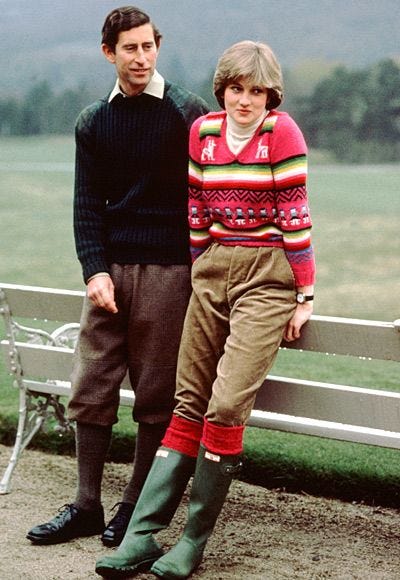
Looking for a new archetype to channel? Consider the Sloane Ranger — native to Chelsea’s Kings Road, public schooled, Diana-revering, last big in the 80s — is reappearing, if somewhat modernised in pop culture (Rivals, anything related to Sloaney Emerald Fennel), London nightlife (The Berkeley Bar, The Kensington Hideaway) and fashion in the form of riding boots, waxed Barbour jackets and cosy knits. From WWD:
[Peter York, who cowrote the original Sloane Ranger Handbook] sees this recent Sloane revival as a yearning and a feeling of “nostalgia and loss” among middle class Britons.
“It’s not quite the same as in ‘MAGA land,’ but there is this feeling of loss, that things were better in the past. You always find it in societies with real problems — and we’ve got real problems,” he says.
Those problems — social, political, financial — aren’t going to get better anytime soon, but how comforting to know there will always be a stripey sweater, a glass (or three) of Champagne or lungfuls of fresh air from Devon or Saint-Tropez to ease the pain.
Ice cream is the status signifier of our time. Dot Dott Dott argues (at length) that even more than sneakers, lipstick, perfume or candles, a sweet, frozen treat is the new entry point for luxury.
The global ice cream market sits at approximately $113 billion today and is expected to grow annually by 5.8% at CAGR over the next few years. It held firm through a pandemic and through the sharpest inflation in a generation. More important than the size is where the growth is concentrating: the premium and artisanal segment, driven disproportionately by younger consumers.
Half of Gen Z and millennials in the US report actively seeking out new ice cream experiences more often than the year before. Between January and May 2025, American ice cream spending surged 26.5% year-over-year, with Gen Z identified as the primary generational driver.
—
Economists have a term for this—”affordable indulgence substitution”—but the term flatters the theory by making it sound more stable than it is. What’s actually happened is a structural collapse in the price of social status. The Diptyque candle, the Charlotte Tilbury lipstick, the “small luxury” that the original lipstick effect pointed toward were still objects meant to be enjoyed individually in private, still sitting on a shelf communicating taste to nobody but you.
Ice cream, iced matcha, the $9 pastry from the right artisanal bakery, the bubble tea drop that lasted one weekend in one city aren’t substitutes for the bag in the way a candle is a substitute for the bag. Clearly they are a different category of transaction entirely. One that figured out that the social signal doesn’t require a moment or a location or a community of people who made the same choice. It’s become more important than a durable object.
The candle costs €60 and nobody knows you own it. The soft serve costs seven euros and it’s been seen by two hundred people by the time you’ve reached the corner. Luxury spent a century building the infrastructure of desire around scarcity and exclusivity. This generation found a shortcut that costs less than a glass of wine and delivers the same feeling of being in the right place, with the right people, at the right time. It’s important to understand the scale of this structural repricing of what status costs as it has very significant implications for every brand that built its identity around being expensive.
A team of researchers at Monash studied memory and executive function on 290 new parents and 100 non-parents and found that the idea of baby brain is bullshit, or more accurately, “the cognitive capacity was the same, but “the capacity is being overwhelmed by the demands of parenthood itself”.” You don’t say!
The marketing mantra “sex sells” has long given way to “nostalgia sells”. But whereas a few years ago the reason might have been to create a sense of comfort and a shortcut to emotional connection in a rapidly changing world, the reasons behind its continued dominance in 2026 (see: Justin Bieber at Coachella, Kate Moss in Gucci A/W26 looking every bit S/S97, 2016, Love Story) are shifting, says Vogue Business.
as brands continue to revisit familiar cultural touchpoints, analysts argue that the emotional function of nostalgia is beginning to evolve. “What I’m perceiving now is a shift away from the escapism of the past to something more in touch with concepts of legacy,” says Stylus’s Corser. “Fast fashion, a music industry upended by fast-churning TikTok sounds, and an entertainment landscape overrun by AI that promises to conjure anything imaginable: people are feeling fatigued, anxious even, by this tyranny of newness. They want legacy, provenance, evidence of effort, and an acknowledgement of the human and heritage.”
In this context, nostalgia becomes less about escape and more about validation — a way of signaling history and depth in a cultural moment that often feels transient.
I talk a lot in this newsletter about how hard life is for young people these days, but it goes without saying that it’s no peachy time to be a mid-lifer either. The Cut’s story, “Midlife Crisis–ing in the End-times”, felt like a painfully familiar echo of conversations I keep having with almost everyone I know at the moment about how it was never supposed to be like this for us at this age.
Ashley was more blunt about her disappointment with the way things have worked out for us, telling me she’s “lost count” with how many times our generation has “done everything we are supposed to do.” “And it doesn’t matter,” she says, “nothing matters … because the system was always stacked against us.”
A perfect storm of factors like stagflation, wage scarring from entering the workforce amid the 2008 financial crisis, and watching several industries crash, burn, and disappear in front of our eyes, including some of the ones we were told would be safe bets — ahem, how’s “learning to code” working out for us now? — have meant decades of stop-and-start career progress and a decreased ability to activate the kind of financial planning that might cushion some of the current blow. And this time, we’re not weathering the storm alone.
It’s one thing to brace for another round of belt tightening, but now we have less money and more problems as our budgets are stretched not just by our needs but those who depend on us to survive. Whether it’s young kids, elderly relatives, or both, we are responsible for way more than just our own cheap rent.
“We’re caring for aging parents while potty training toddlers,” says Catherine. She sometimes cries herself to sleep thinking about the world she’s leaving behind for her kids.
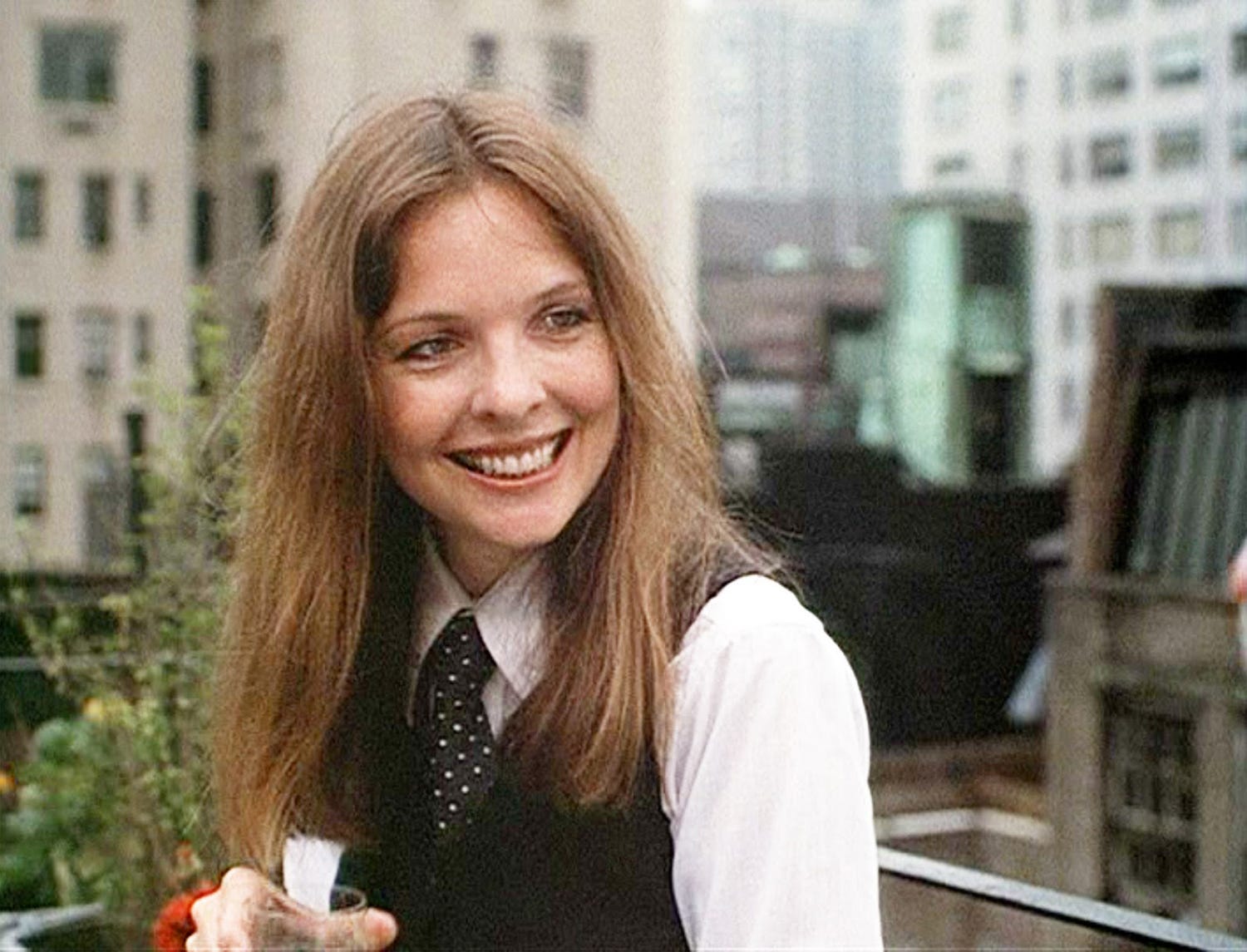
It hurts my heart a little bit that I am neither rich enough nor New York-based enough to at least visit the auction of Diane Keaton’s things, let alone buy everything.
Held as a live auction in New York on June 8, The Diane Keaton Collection: Architecture of an Icon presents the full breadth of Keaton’s creative canon. Anchoring the auction are emblematic fashion pieces from Ralph Lauren and Thom Browne, modern and contemporary American fine art, collages by Keaton’s own artistic hand, and the original untitled script for Annie Hall (1977).
Running concurrently are three online auctions, each dedicated to one of Keaton’s fundamental touchstones: high fashion, interior design & decorative arts, and storied ephemera from both her personal and professional lives.
See you next week xxx
So enjoyable to read your newsletter each & every week. Thanks