
Edition 78
It's my birthday and I'm going to need a bigger supplement shelf and all new passwords
The newsletter is free for all this week to make up for the fact that I’ll be off celebrating my birthday with friends in New Zealand next Sunday, so I’m giving myself the week off — but bear with me, because this is a big one. Fifty. Sweet Jesus.
You can hold the sympathy or platitudes though. I mean, yes, on the surface, fifty is a deeply unsexy number, undeniably smack-bang in the middle of middle age, and one you never really think you’ll be. When I was growing up, I saw myself only in my sort of girl boss/young mum era, and then much later as an elegant, retired older lady with somehow big Italian siren vibes, even though there’s no Italian in me whatsoever. You don’t ever really visualise the long middle. In the kids’ clapping song, Susie only ever grows up to be a teenager (ooh, ahh, I lost my bra, I left it in my boyfriend’s car), then a mother (smack, smack), then she skips straight to grandma (all that knitting). She’s never a mother who theoretically could also be a grandmother but who still has probably 20 years of work and commitment to trying to stay relatively interesting and hot and informed and pedicured ahead but who also would always happily stay home and eat cheese alone if she was given the option. Harder to rhyme I guess.
But now that I’m here, the number feels good. I like who my friends and I have become as we’ve ripened. And that is a good word for this life phase: ripe. Things feel full and juicy and as they’re meant to be (not my boobs, of course, but almost everything else). I like what I have planned for the next stage, both for work and personally. And I’m especially excited for the weekend’s festivities — the theme is “Après-Ski, 1976”. People our age (ugh) know how to celebrate because we learned how to do it when the going was good (i.e. before camera phones and social media). Get ready for some truly hideous amounts of faux fur and some plane outfits that will definitely end in chafing and blisters. Apologies in advance to our fellow flyers.
As a little gift from me to you to celebrate my 50 trips around the sun: paid subscriptions between now and Thursday are 50% off.
What did I do this week between work (currently working on such a fun magazine one-shot project — in print! —that I can’t wait to tell you about) and preparing for next week’s good times? I read an advance of my friend Zoe Foster-Blake’s upcoming book Group Chat and loved every bit. You can pre-order it now. There’s a very memorable scene in it that’s inspired by a real life thing that happened to us, one of my all-time favourite and most traumatic life memories, but more on that in another newsletter. I also finally gave in to the fact that I have grubby children and a hairy black dog and replaced my white sofa. My new one is the MCM House Baxx. It’s charcoal velvet (velvet is surprisingly dog friendly), huuuuge and deep (each seat comfortably holds a three person-spoon but also feels like a warm hug to lie on alone) and is currently on sale. It may have changed my life.

On to the links…
Should we all be taking glutathione? In keeping with the big birthday this week (won’t be the last time I mention it, appears to be a coping mechanism), my supplement stack situation has hit a level of unhingedness never seen before. What once was a bathroom shelfie scenario worthy of an Into The Gloss feature due to so many years as a beauty editor or beauty editor-adjacent, these days the look my bathroom shelf is going for appears to be more Into the Chemist Warehouse — and every time I think I’ve found the ceiling, I come across a new one to add to the pile. This week’s contender: glutathione, touted all over social media right now as the “mother of all antioxidants,” promising an inflammation-busting, immunity-boosting, skin-glowing trifecta in a dissolving strip designed to skip your digestive system entirely. Except — according to a story in the NYT — the best case scenario is that most experts reckon your body breaks it down before it can do anything useful at all, strip or no strips. Worst case scenario, coming courtesy of a study on mice, is that there’s a chance that cancer cells can actually hijack glutathione as fuel to grow. Given that I’m already rationing my daily real estate between creatine, magnesium, hydration salts, Vit D, protein water, zinc, fibre, and rhodiola, this is one I’m going to skip, at least until the science catches up to the TikTok.
Speaking of… my favourite thing to ask people now is what pills they pop every day (omg aging really makes you so cool right?) and so I was in heaven recently when I met Dr Nel Wijetunga, who owns the Belleage clinic in Sydney’s Waverley. She’s a physician and a fine artist, exactly the combination of skills I want working on my face, so of course I interrogated her while ostensibly there to get a vitamin infusion.
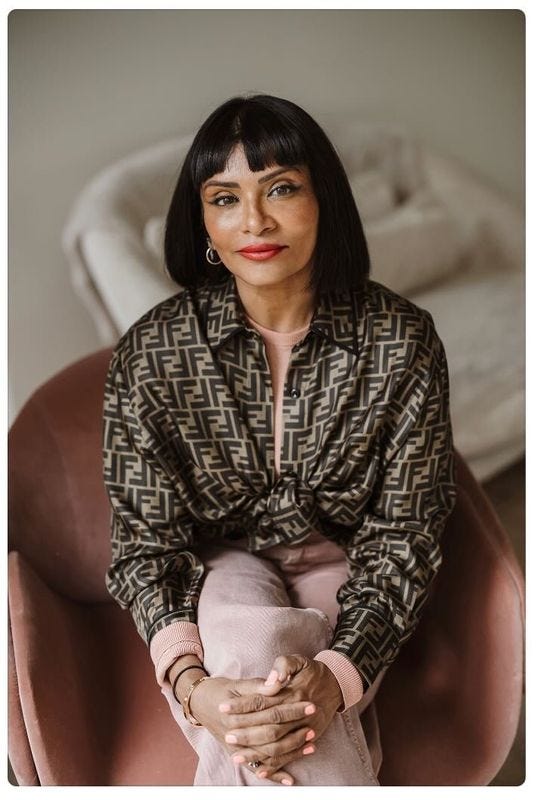
On her own supplement stack: “I do love CoQ10. I’ve been taking that for years and I don’t know whether it’s placebo or not, but I know that when I don’t take it, I feel tired. I take NR [Nicotinamide Riboside] every day as a tablet — that and NMN [Nicotinamide Mononucleotide] are both metabolites of NAD+ and reasonably well absorbed. I do zinc and magnesium. But you know, there’s only so many pills you can take!”
On her favourite treatment to administer: “My favourite is a Vitamin C infusion. It never gets a mention. It’s always NAD+, I think because Kim Kardashian goes on about it. But NAD+ is not an easy IV infusion. You feel pretty sick. You have to take four or five in a row and then maintain it. But the Vitamin C is great for energy, it’s great for immunity, it’s great for focus. Particularly during these cold winter months, Vitamin C in high doses is shown to be antiviral. You can take your tablets of Vitamin C, but only 30 per cent is absorbed, whereas with an IV, it’s a hundred percent absorbed and you get the hydration as well. You do it as a boost every three to four months.”
On something she thinks is overrated: “Everyone loves a cold plunge, but they’re shown not to be as effective for women. I’ll tell you one thing I have observed — though this is purely my observation — but when your body goes into cold, your blood flow goes away from non-essential organs, including skin. It goes to the brain, it goes to the gut, and your skin is without blood flow for a real while. And I feel sometimes that for some people who cold plunge regularly, their skin isn’t that great.”
On the current obsession with staying young forever: “I don’t think that’s realistic. I think you can only be the best — and not worst — version of yourself. My father is a good 87-year-old, but he’s not a 25-year-old. Would he want to be? I don’t even want to look 25, I think that women take on a different beauty when they age. And that doesn’t mean that aging gracefully means not giving a shit, because to me that’s just as bad. You’ve been given a physical body, just look after it as best you can until you don’t need it anymore.”
On lips: “For older women, the biggest problem is actually often just dehydration, because after 40 the eye area gets a bit sunken and you do look tight, and when you look tight, you look tired. And the lips are very difficult because they’re always peeling and dry. So I tend to do more of a skin booster, which can give a tiny bit of volume but it’s mostly hydration, and I’ll only use a tiny bit of filler if they need structure, usually when the top lip thins. But I put just where the line should be, not where it never was. So many people will say, don’t waste any leftover mls — put it in. And yet that 0.2 ml might be the difference between a good job and a bad job. And once you’ve got the structure, the skin booster is a great top up. You can do it a couple of times a year, and the filler maybe once every four years. You really don’t need much.”
On what’s next: “I’m hoping that we are going past the copycat era of beauty where everyone looks the same. You’ve got to have the right brows. You’ve got long eyelashes, very big cheeks, a very narrow face. Big lips. Very pointed chin. They could be related. And it’s so technical, they’re not actually looking at the face. It’s done for social media, which is a two dimensional look, but the way people look in 3D is very different. People often talk about the Golden Ratio. But I don’t necessarily think that works on everyone. Every face is different and sometimes the fact that you don’t have the Golden Ratio is what makes you unique. Beauty is not just about what you need, but it’s also what you don’t need.”
Related: From the BBC - A new term has been coined by dermatologists and academics: cosmeticorexia, which they define as having an unhealthy obsession with achieving “flawless” skin from a young age, leading to an obsessive use of cosmetic products.
Prof Giovanni Damiani, an Italian dermatologist from the University of Milan (IT), was so perturbed by what he saw as the compulsion of some of his younger clients he began to investigate what was happening.
_
He interviewed 55 of his patients, aged between 8 and 14 years old. Those who displayed signs of cosmeticorexia, he explains, were mobile-phone obsessed, and would spend hours watching skincare videos on social media. They would also use up to 10 different skincare products daily, and they would not socialise - even with family members - without wearing make-up.
But while your local Mecca might still be full of cosmeticorexic teens and tweens spending all their gloriously 100 per cent discretionary money on beauty (jealous), older Gen Z’s (and, I’d say, everyone else required to adult in 2026, those supplements aren’t paying for themselves) are having to rein it in. This sounds healthy though? From Bustle:
Millennials were once told to stop buying avocado toast so they could afford a house, and now, older Gen Zers are grappling with their own financial trade-offs — like opting for a cocktail out with friends instead of the new upscale face wash everyone is talking about. Since twentysomethings may not be able to easily score promotions or control the cost of living, they’re sacrificing elements of their beauty routines for the sake of their wallets. A by-product of those choices is that they often end up reevaluating their relationship with their looks as a whole.
We’re in the “golden age of hacking” and we should all be very paranoid. By far the thing I read that had me the most freaked out all week, and the piece you should read above any others, is New York Magazine’s cover/horror story on just how exposed all of our personal digital information really is. Remember how much you scoffed reading Blake Lively and Taylor Swift’s texts? Remember how dumb they sounded? Well, people in glass houses etc etc. This story made me go back and read a bunch of my own texts and Notes out of context and as a person who has had the same email address for an eternity and been on the Cloud for nearly as long… I shudder to think.
The knee-jerk psychological response to these stories may be to reassure yourself that you, a regular, nice person, are safe because you have nothing to hide. You are not a mogul, a celebrity, or a political dissident. Most of us, however, no matter how seemingly unimportant, conduct ourselves differently in public than we do in the digital realm, our version of behind closed doors. The sanctified chambers of our text bubbles, search bars, and SENT folders are safe spaces to be base, petty, loose, sarcastic, or unkind; to explore a fetish or experiment with a boundary; to speak in the hyperbolic id of the internet. This version of your online self is like a first draft, careless and dashed off, intended for a small set of confidants, not yet appropriately sanitized for public presentation. The problem now is that this private self has been recorded in your trove. Its very existence, and the sheer volume of its contents, means it could be useful, interesting, compromising, or lucrative to someone, somewhere, given the right set of circumstances. The spigot just has to be turned for information you thought no one would see to come flowing out. “Everyone who is smart,” an acquaintance in PR tells me, “is paranoid right now.” Try to assess the state of your digital record and its size and shape becomes too cumbersome to fathom, like opening a door into an endless vault, the junk mixed in with the trade secrets, where you are the lone custodian.
—
I ask Harris to lay out the possible remedies for what he has officially deemed a “moderate high risk” situation. First, I need to do a sweep of all the old app and website accounts I’ve left behind and delete them (I could get rid of my long-dormant Co-Star astrology account, for example). I need to start using a password manager; he recommends the Apple one that comes with my phone. I should use it with two-factor authentication. I already use a data-removal service called Optery to take down the bits and pieces of information about me being sold by those data brokers that have made their way onto the web — that’s good. Don’t use WhatsApp; it’s not secure enough. For messaging, he prefers something ephemeral like Signal, but iMessage is end-to-end encrypted, so it is pretty secure (though still potentially discoverable in a lawsuit). But don’t keep iMessages on my computer. Even if I log off, they might leave a trace that could later be extracted by forensics. Certainly don’t use iMessages on my work computer — don’t do anything personal on my work computer. (During our meeting, my work laptop asks me to sign in to my Apple account multiple times.) Turn off retention of my messages and make sure they aren’t being backed up somewhere. Use a VPN to hide my internet browsing. Don’t use Google; it tracks too much. Use Firefox instead. Do not join public Wi-Fi networks without a VPN, lest someone stage a man-in-the-middle attack, spoof the Wi-Fi, and get inside my device. I should be using dummy emails and at least one dummy phone number. When I want to say something important, I should pick up the phone. Walk into someone’s office. Don’t write it down
Digital camera sales are continuing to boom, with the $2648 Fujifilm X100VI still the cult retro camera to have for those grainy party pics that look like they could have been taken anytime between your parent’s 21st in the ‘70s to a Cobrasnake party in NY in the noughts, depending on the ‘recipe’ you choose to shoot in. But expect prices to come to down eventually as camera brands look for ways to keep up the momentum.
Ichiro Michikoshi, analyst at consumer electronics research firm BCN, believes digital camera prices are becoming too high, as an average digital camera goes for $600 compared with $455 for a smartphone.
“For ordinary consumers, spending a million yen on camera gear is absurd. There’s a huge gap between what consumers want and what camera companies are offering,” he said. “I think that’s a major problem.”
Michikoshi argued that consumers were not getting a good deal as the technology in cameras had not improved greatly and interfaces remained fiddly.”“Honestly, I think it’s difficult to believe that this strong momentum will continue indefinitely,” he said, predicting the greatest long-term threat could be a Chinese competitor such as Huawei or DJI putting its technologies into a standalone camera.

Swinging is back. In an age of relatively mainstream but complicated ethical non-monogamy, the idea of “swinging” — being otherwise in a monogamous relationship but being up for some partner swapping for a night, or maybe attending a sex party together — feels a bit like a relic from a looser, Austin Powers era. But according to Cosmo, it’s not just something your weird neighbours may or may not be into.
Increasingly, otherwise monogamous couples are opening their relationships up at sex parties, agreeing on a joint ‘hall pass’, of sorts, for the night, swapping partners, engaging in threesomes, and then leaving their shenanigans behind and heading back home, as if nothing had happened. In short: whether they call it this or not, there’s a growing cohort of older Gen Z and younger millennials — zillennials, if you will — reviving swinging for the sex party age.
In fact, the UK-based swinging app SwingHub reports a sharp spike in under 30s joining the platform in the past six months. As Bailey Masterson, SwingHub’s Head of Operations, tells Cosmopolitan UK, the demographic shift has been swift: “In a relatively short period of time, the share of younger adults joining the platform has [doubled] compared to where it sat through most of 2024.”
Gen X is the epitome of the guy who peaked in high school and is now all bitter about how his life turned out. (I can say it because I am one — Gen X, not a bitter guy who peaked in high school.) Usually when I mention Gen X by name in this newsletter it’s because some young dreamer with Kate Moss in her eyes has written a story declaring us to be the coolest generation with the most iconic pop culture. Sadly, today is not one of those days. The populist movement we’re currently living through in Australia, where One Nation’s popularity sits one point behind Labor’s according to recent polling (!!) is largely due to the very same people who were weaned on Nevermind and scorned the boomers for disemboweling their revolution for a pair of running shoes (as so astutely put by Winona Ryder’s character Lelaina in Reality Bites). But if the boomers traded their values for corporate comfort, it looks like we’re trading our trademark skepticism for somewhere to put the blame. From the Guardian:
The grievances that have driven voters towards One Nation have coalesced among people in their 50s, where support peaks at 43% among gen Xers, according to polling by Redbridge.
Experts refer to gen X as the sandwich generation, having to provide for older parents and younger children. They face a swathe of economic challenges including far lower home ownership and watching the rich get richer as they struggle with low wages growth that has many feeling left behind.
It’s this environment, the unique issues stretching people in their 40s and 50s, which experts say could be driving gen Xers towards what once were the fringes of politics.
Move over millennial blanding (the pastel pinks and sans serif aesthetic loved by brands like Glossier and Allbirds and a gazillion other of the time), there’s a new design ethos in town. Think of it as Needoh in 2D. From the NYT:
Let’s call it hyper goo: a style of glitchy, gloppy maximalism that has landed on consumer culture like a wet sneeze. Text on shampoo bottles and pickle jars increasingly resembles the inner workings of a lava lamp. Negative space has grown cluttered with doodles that look as if they might have been made in Microsoft Paint.
The look involves an uncanny mash-up of surreal smoothness and digital degradation, with the saturation cranked up high enough to startle Lisa Frank. The pastels that were ubiquitous a decade ago aimed to reassure an earlier generation that they could use their limited spending power to optimize their lives. Hyper goo does the opposite, reflecting back to Gen Z the distortion of the world in which they are coming of age.

Looking for your next big idea? (Or just to be less demoralised for a hot minute?) Fast Company’s list of World Changing Ideas for 2026 has just been released, celebrating businesses and organisations working to solve some of the world’s most challenging issues in creative ways, and it is inspiring. And also just so lovely to read about companies where the whole goal isn’t just to make the founders supremely wealthy at the cost of all of society.
See you in two weeks xxx
The interview with Dr Nel Wijetunga was fascinating.